

What is ADCIRCA® (tadalafil)?
The only PDE-5 inhibitor for PAH with once-daily dosing2
- 40 mg once-daily starting dose and dose maintained for most patients.2 Tadalafil is metabolized predominately by CYP3A in the liver. Use of ADCIRCA with potent CYP3A inhibitors, such as ketoconazole and itraconazole, should be avoided. For patients on ADCIRCA therapy that require treatment with ritonavir, ADCIRCA should be discontinued at least 24 hours prior to starting ritonavir. For patients on ritonavir therapy that require treatment with ADCIRCA, start ADCIRCA at 20 mg once a day. Use of ADCIRCA with potent inducers of CYP3A, such as rifampin, should be avoided. The use of ADCIRCA is not recommended for patients with severe renal or hepatic impairment. For patients with mild to moderate hepatic impairment, dose adjustment is required. Please see Full Prescribing Information for dosing recommendations for patients with mild to moderate renal or hepatic impairment.
- Administered as two 20-mg tablets and can be taken with or without food.2
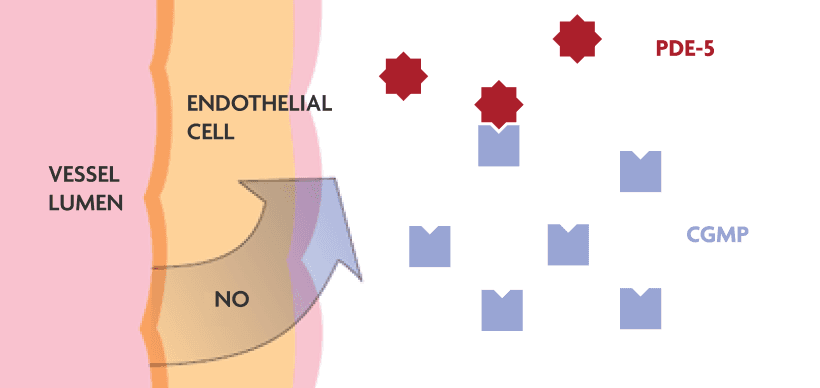
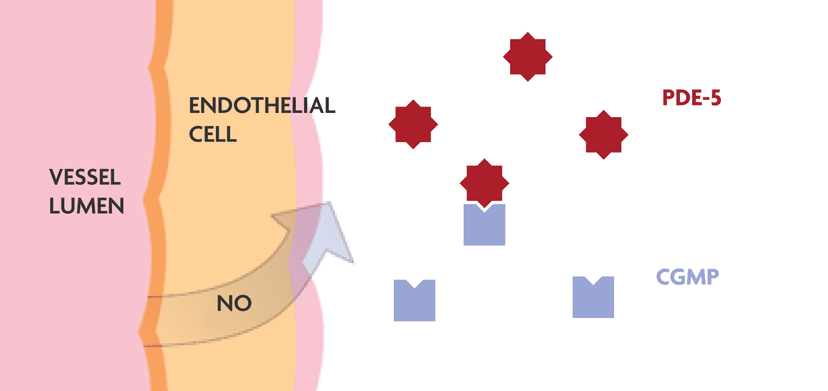
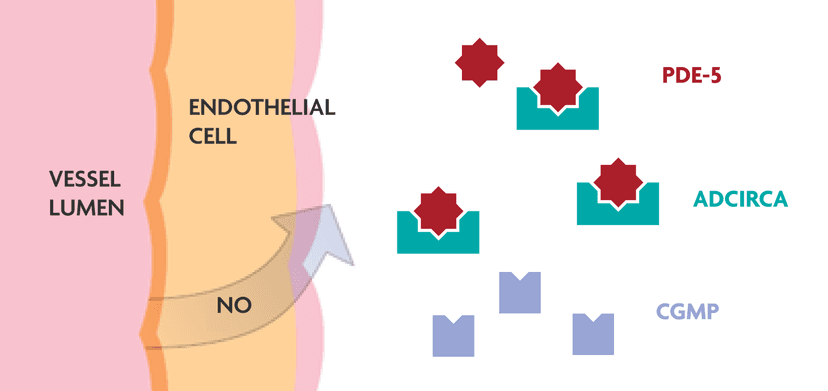
PDE-5 is a naturally occuring enzyme responsible for degrading cyclic guanosine monophosphate (cGMP), an essential component in vasodilation.3 PAH is associated with the impaired release of nitric oxide (NO) by the vascular endothelium in the pulmonary vasculature and an associated decrease in the synthesis of cGMP in smooth muscle cells.2 Once-daily ADCIRCA acts on the NO pathway via PDE-5 inhibition to increase vasodilation in the pulmonary vasculature2
Efficacy and Safety
Loading tabs...
The only PDE-5 inhibitor for PAH with once-daily dosing. 40 mg once-daily starting dose and dose maintained for most patients. Administered as two 20-mg tablets and can be taken with or without food.
FAQs
For answers to common questions about ADCIRCA
ADCIRCA can be used in all functional classes of PAH. Studies establishing effectiveness included predominately patients with NYHA Functional Class II–III symptoms and etiologies of idiopathic or heritable PAH (61%) or PAH associated with connective tissue diseases (23%).2
ADCIRCA is an inhibitor of phosphodiesterase 5 (PDE-5), the enzyme responsible for the degradation of cyclic guanosine monophosphate (cGMP). PAH is associated with the impaired release of nitric oxide by the vascular endothelium in the pulmonary vasculature. Inhibition of PDE-5 by tadalafil increases the concentrations of cGMP, resulting in relaxation of pulmonary vascular smooth muscle cells and vasodilation of the pulmonary vascular bed.2
ADCIRCA is the only phosphodiesterase 5 inhibitor (PDE-5i) approved for PAH with once-daily dosing. The recommended starting and maintenance dose for most patients for ADCIRCA is 40 mg (two 20-mg tablets). ADCIRCA can be taken with or without food. Dividing the 40-mg dose for ADCIRCA over the course of the day is not recommended.2
Tadalafil is metabolized predominately by CYP3A in the liver. Use of ADCIRCA with potent CYP3A inhibitors, such as ketoconazole and itraconazole, should be avoided. For patients on ADCIRCA therapy that require treatment with ritonavir, ADCIRCA should be discontinued at least 24 hours prior to starting ritonavir. For patients on ritonavir therapy that require treatment with ADCIRCA, start ADCIRCA at 20 mg once a day. Use of ADCIRCA with potent inducers of CYP3A, such as rifampin, should be avoided.2
The use of ADCIRCA is not recommended for patients with severe renal or hepatic impairment. Please see Full Prescribing Information for dosing recommendations for patients with mild to moderate renal or hepatic impairment.2
This document includes some of the most important information you should know about ADCIRCA, how to take ADCIRCA properly, common side effects, and more.
Resources
United Therapeutics is committed to helping patients with PAH. Please click on the link above for resources that can help you support your patients beginning treatment with ADCIRCA.